How it plays
Each season the forecast shows what is coming and from which side: flood, mudslide, wildfire, lava, or a cloudburst overhead. Pour your materials to get ready, then start the season and watch the simulation play it out. You can keep pouring while it does.
Sand is plentiful and piles into banks, but water and lava slowly seep through it. Clay is scarce and watertight, and lava bakes it into brick. Water puts out fire and turns lava to stone. Seeds root into sand and bind it solid, though the plants on top can burn. Dig cuts firebreaks and wells.
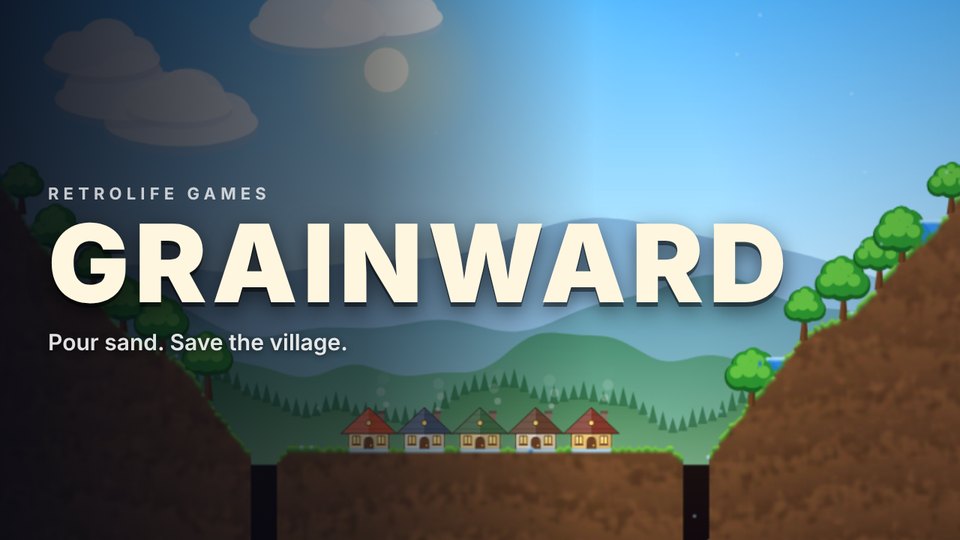
Two gorges beside the village swallow what flows in until they are overwhelmed, and anything that reaches the bottom of the valley drains away. Whatever is left behind stays: mud sets, lava cools to stone, and your walls are still there next season.
You score for every house standing at the end of each season. Every third season the villagers offer an upgrade, and supply balloons drift over with extra materials.
Modes
Controls
Every key can be changed on the Controls screen. The mouse wheel also changes brush size.
On a phone or tablet, hold the phone sideways and press and hold on the valley. The stream lands just above your finger so you can see it. Tap the buttons to pick a tool, change brush size and start the season.
Tips
- A thin clay wall beside a gorge keeps a flood out of the village. Save sand for big banks and for smothering mud.
- Walls trap rain. When a cloudburst is forecast, dig a well inside the walls so the water has somewhere to go.
- Wet a sand bank before you seed it. Watered roots go twice as deep.
- Lava that cools in a gorge turns to stone and blocks it. Dig a channel through before the next flood.
- Keep some water back. A burning house needs a splash straight away.
 Gurglegrid
 Stackwind
 Flockwhistle
 Echoblast
 Tidewharf
 Peekwhirl